

One moment you‘re the player of the game, driving confidently down the lane, dribbling past the players, and everyone is cheering for you. Next thing, you’re on the ground with constant pain trying to figure out how this happened all of the sudden. Maybe a collision? Maybe a twisted ankle? That‘s not the most important information for you right now, all you can think of is that the pain needs to stop somehow. Seconds feel like minutes, minutes feel like hours, and you say to yourself, “Is anybody going to help me?”
We all must know what EMS stands for: Emergency Medical Services. We all must also know who they are, but are we aware of the impact they make and their background? According to the National EMS Memorial Foundation, modern EMS initially developed during Napoleon’s time to aid injured soldiers; few major changes occurred in EMS until the 1960s. Between 1960 and 1973, a number of medical, historical, and social forces converged, leading to the development of a more structured EMS system in the United States. It transitioned from funeral home transport in the 1950s to standardized, trained paramedic care by the 1970s, now focusing on rapid intervention for stroke, trauma, and cardiac events.
As competitive and recreational sports continue to expand globally, the need for immediate, specialized medical care at sporting events has become increasingly important. Sports settings present a range of emergencies that EMS may encounter, including traumatic injuries such as fractures, dislocations, and concussions, as well as medical emergencies like cardiac events, heat-related illnesses, and respiratory distress. The dynamic and physically demanding nature of sports increases the risk of injuries, and the fast-paced nature of many games requires EMS to be agile, well-prepared, and equipped to handle diverse situations.
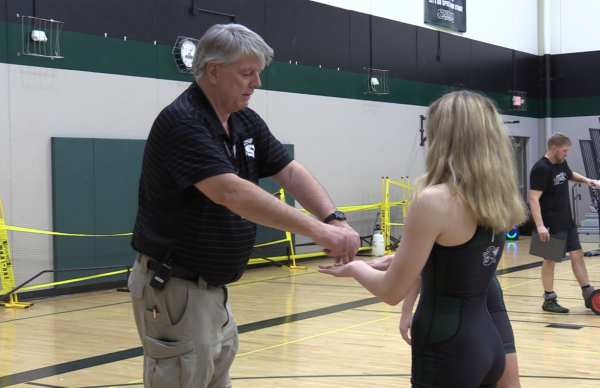
David Turner, known as “Dave” by many students, is the current Athletic Trainer of Spectrum High School. He mentioned that while he was on a Missionary trip in Mexico there was an emergency where someone needed assistance, Dave having some medical experience, helped the injured person until he brought her to the hospital. A moment like this impacted the thought of what he really wanted to do in the future.
“I decided at that point that if I was going to continue to be taking people out of the country, I needed to have somebody with me who could handle emergencies. And since I’m the only one I know who’s going to be every place that I am, it better be me,” Turner said.
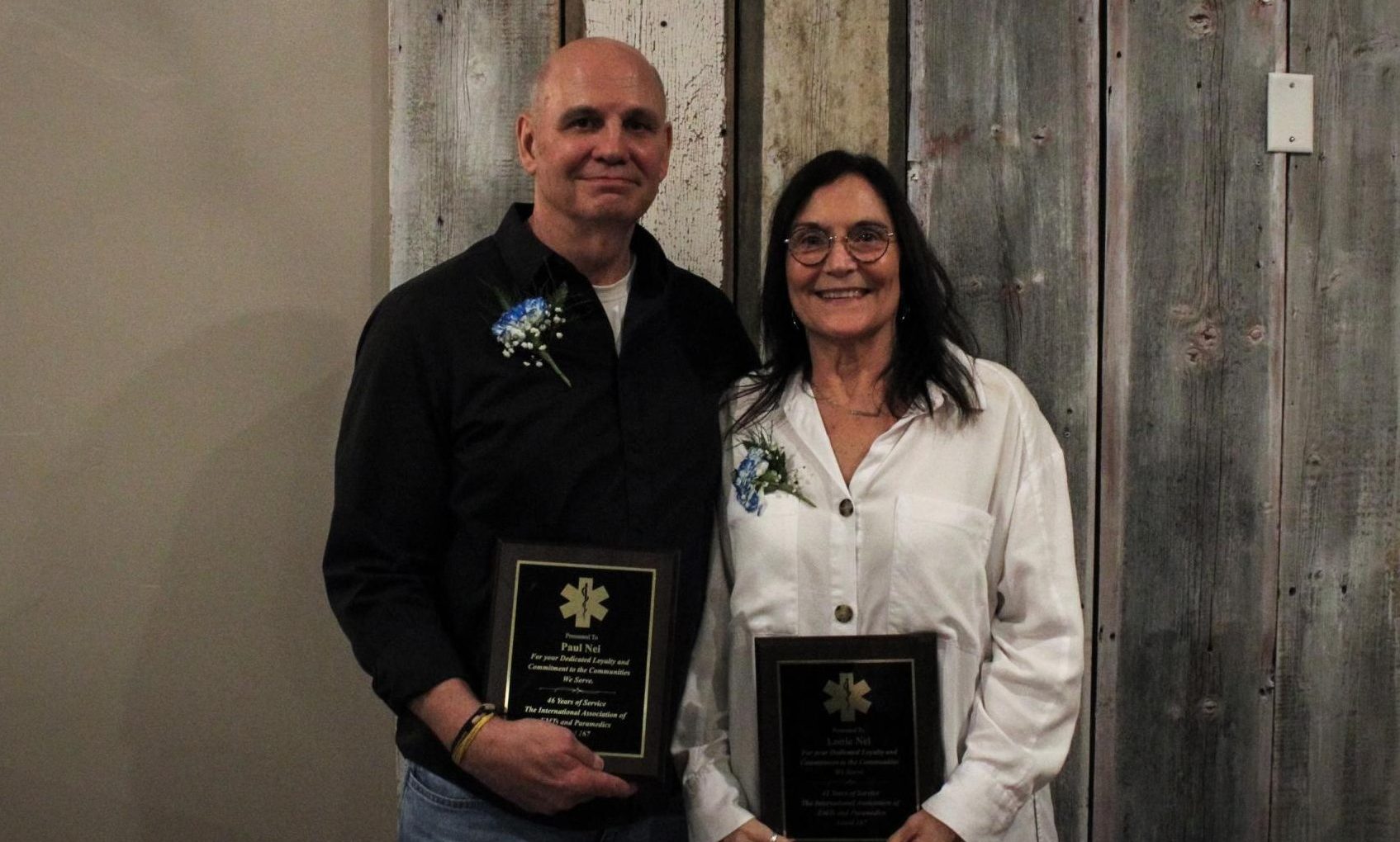
Everyone has their own reasons on why they decided to be part of EMS, either from an experience, an idea, a passion, or they simply thought it was fun. Experiences play a main role in this field, since everyone goes through different circumstances and has many different medical calls to respond. Lonie Nei, a retired paramedic, shared her experience where she received a call that a cross-country runner suffered a cardiac arrest during practice.
“I responded to the call and the trainer with him was an old medic for us. So he started CPR, and then when we arrived we started doing our stuff and it took quite a bit but we did get him back. He was transported and was neurologically safe. He is actually running again nowadays,” Nei said, “I was invited to his graduation party and got to see him and they were just very appreciative.”
Moments like this show no matter how long it takes you would not just be doing your job, you would be saving a life and that is something that you cannot forget about. The overarching goal of the public-safety community is to ensure that 911 callers receive the most appropriate emergency response as quickly as possible. Lives often are on the line in an emergency, and every second matters.
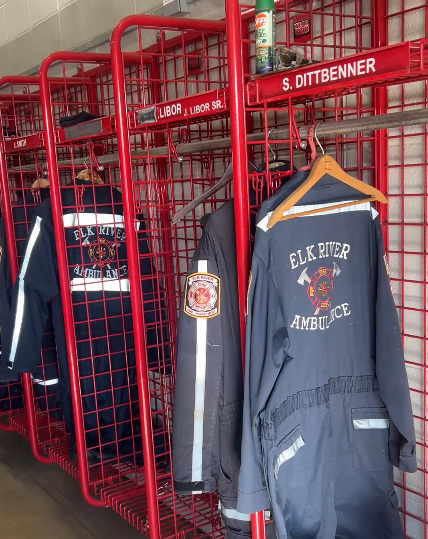
Jim Mesaros, an Emergency Medical Technician (EMT), currently works at the Elk River Fire and Ambulance Service department. He mentioned how important quick medical responses are. One second you could be on the ground in terrible pain and the next seconds could be crucial to your life.
“Quick medical response can make the difference between life and death in worst case scenarios. Also responding quickly can aid in the effectiveness of recovery. By responding fast and if needed, transport to a medical facility, recovery could be a lot smoother, a lot quicker, and more efficient than if the response was delayed,” Mesaros said.
Competing in athletics brings great joy to both students and their families, and it can be a great chance to develop habits that will help you to stay healthy throughout your life. With competition comes some risk of injury, but a little knowledge goes a long way in keeping you safe while you play sports. Mesaros explains how you can stay safe by following some health procedures such as using adequate equipment, staying active, and making sure your muscles are properly stretched.
“When it comes to staying safe, safety equipment is the most important. You know the advent of helmets and proper safety equipment has prevented a myriad of injuries. Also conditioning, strength training, flexibility, and obviously all the things that are tenants to make you better at your craft are also going to help to prevent injury. If you get injured all this is going to help prevent a long-term injury and will bring better outcomes,” Mesaros said.
Paul Nei, Lonie‘s husband and also a retired paramedic, shared his viewpoint on safety from everything you should consume to the impact of staying healthy all the time.
“Being a healthy person all the way around is the best way to stay safe, getting your rest, getting fluids, eating, and keeping yourself strong. Accidents can really happen to anybody. Even if you’re healthy, it might not matter but for the most part, you do better if you’re healthy. So, you do better both with the injury and then recovery if you’ve been taking care of yourself well before,” Nei said.
Being part of the Emergency Medical Services (EMS) system comes with a lot of challenges such as responding to emergencies where every second that goes by is crucial, and making sure to stay calm under pressure. They often face difficult situations which can be stressful and emotional, depending on the emergency. However, most of the time it comes with rewards. Having to know that their quick and efficient service has a big impact on everyone, especially those life and death moments, gives them a strong sense of purpose and fulfillment. According to Lonie, all the calls that she received were always very different from each other making it difficult to know what you‘re going to expect from it, making this a main challenge.
“One huge challenge is not knowing what you’re going to come upon, it can be something as small as someone throwing up to a full-blown cardiac arrest or a really nasty trauma. Children’s calls are very hard, so you really kind of have to calm yourself when you’re going on a call. Everybody has their things that makes them a little more anxious, so certain calls you just really have to take a deep breath and just try to calm yourself,” Nei said.
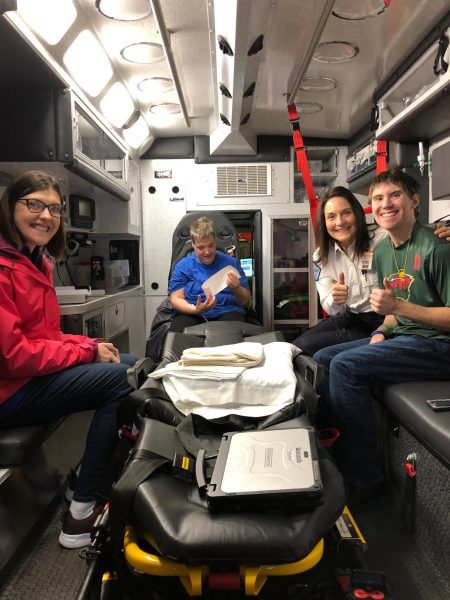
Dave on the other hand, explained how showing his care and effort leads to something rewarding.
“The most rewarding part to me is being able to help somebody at a time when it could be their worst day they ever had. I’m there to help them make the day maybe not quite as bad as it could be because most of the time when people are injured, it’s a very negative experience,” Turner said, “I’m there for you, I can’t take the pain away but I can eliminate some of it maybe depending on the injury. I can also make it so that it’s not worse, because I don’t like to see somebody get hurt, but I like to be around to help them if they do get hurt.”
Emergency Medical Services play a bigger role in the life of many student-athletes that you might not know or be aware of. It always starts from responding quickly to crucial injuries, staying calm in high-pressure situations, and showing your care and effort to the student-athlete that makes EMS always prepared and ready to succeed in every call. You might see them at many sporting events and not pay much attention while thinking that they are just another group of fans, but they are there to ensure that emergencies are handled properly. By being aware and learning more about their work, students can understand the impact they make on many lives, especially on those life-threatening moments. Maybe next time you find yourself being cheered by everyone, driving confidently down the lane, and dribbling past the players, you will know that someone will be there to help you shortly.